Gap-and-Go: Anatomy of a Pre-Market Gapper
Pre-market gap-ups fail more often than they run. Here's how to read the pre-market tape to separate the two.
What is a gap-and-go?
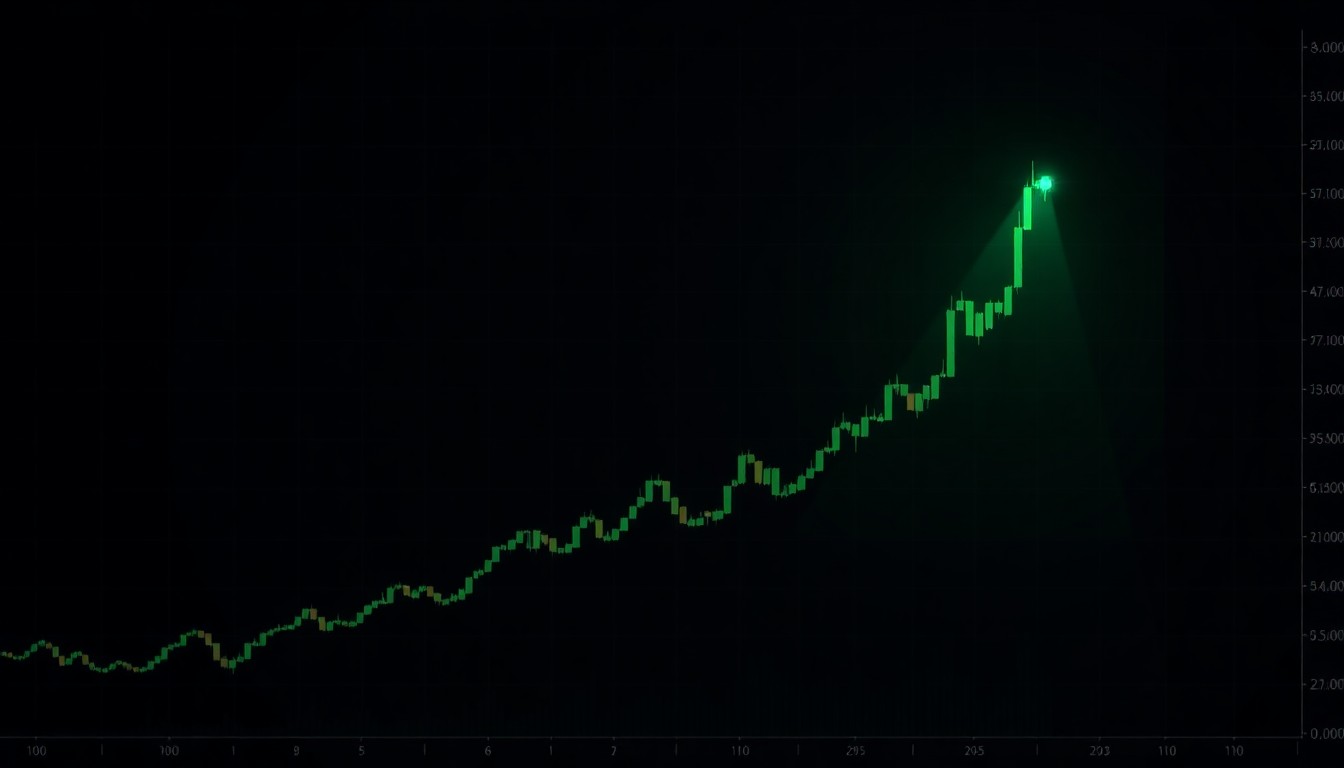
A "gap-and-go" is a pre-market gapper that holds the gap at the open and continues higher into regular hours. It's the single most common small-cap momentum setup — and one of the most mis-traded. Most gaps fade. A minority "go". The difference between the two shows up in the pre-market tape, if you know how to read it.
Of the 323 catches in the last 90 days that fired with a GAP_UP pattern label, 85.8% closed their session above the catch line — i.e. they did not "fail" against the catch. The average peak from catch was +17.4%. Important caveat: those numbers describe what the scanner observed after applying its full set of internal scoring gates; they are not the base rate for "any pre-market gap." The base rate for raw gaps is much harsher (more on that below).
This guide walks through the anatomy of a real gap-and-go and the tells that separate it from the fade. Educational only — nothing here is financial advice, and always do your own DD.
The base rate: most gaps fade
Before we get to the pattern, a sobering fact: empirically, most pre-market gappers fade within the first 30 minutes of regular hours. Academic studies on small-cap gap statistics find that roughly 55–65% of gap-ups fill at least half the gap by 11 AM on the same day.
That means the default assumption should be "this gap will fade." Every gap-and-go trade is a bet against the base rate. You're looking for specific evidence that this gap is in the minority that goes. Without that evidence, skip.
The five-part anatomy of a gap-and-go
1. The catalyst
Almost every gap-and-go has an identifiable catalyst: earnings beat, FDA news, contract award, reverse merger, geopolitical headline, or a viral squeeze. The catalyst is the reason the gap happened, but — important — it's not the reason the gap will hold. Plenty of perfectly valid catalysts produce fading gaps.
What matters is whether the catalyst is still developing (earnings beat on day one of an earnings week, social chatter that's still accelerating) or stale (a press release from 6 AM that already peaked). Stale catalysts fade. Developing catalysts often continue.
2. The pre-market high
Between 4 AM and 9:30 AM, pre-market traders are making a bet about where the institutional opening print will be. The pre-market high is the consensus estimate of "where buyers are willing to pay up to."
A gap-and-go holds its pre-market high for the 30–60 minutes leading up to the open. A fader loses the pre-market high in the last hour, signaling profit-taking by overnight holders. Watch this window obsessively.
3. The RVOL expansion
Pre-market RVOL tells you whether the gap is real. A 40% gap on a stock that traded 200k pre-market shares is a ghost — one large buyer. The same 40% on 5 million pre-market shares is a herd. Herds are the precondition for gap-and-go.
See our RVOL guide for the right way to compute this in extended hours (hint: you need a separate pre-market baseline, not the full-day average).
4. The 9:30 test
The first 10 minutes of regular hours are the gap-and-go's stress test. Overnight holders take profit. News-chasers arrive late and get trapped. The opening auction resolves imbalance. What you want to see:
- Price dips — maybe 3–5% — then stabilizes above the pre-market high.
- Volume is heavy (this is the highest-volume window of the day).
- The dip low is above VWAP, or reclaims VWAP quickly.
What you don't want to see: a straight drop through the pre-market high, losing 10%+ in the first 15 minutes. That's the gap filling, and it usually keeps filling.
5. The continuation signal
The cleanest gap-and-go confirmation comes from a pattern on top of the gap hold: a 5-minute opening range breakout (see our ORB guide), a VWAP reclaim (see the VWAP deep dive), or a bull flag above the pre-market high. Any of these three, on expanding volume, is your confirmation.
Without a confirmation pattern, you're guessing. And in gap-and-go trading, guessing is the expensive part.
The gap-fader checklist (what to avoid)
Equally valuable: knowing which gaps to skip. A gap is likely to fade if:
- Pre-market volume is thin (under 500k shares for a 30%+ gap).
- Pre-market high was set hours ago and has been drifting lower since.
- The catalyst is already priced in (stock was already up 100% this week).
- Price loses the pre-market high in the last hour of extended hours.
- The 9:30 candle is a large red engulfing the previous green.
Any two of these and the probability tilts heavily toward fade. Three or more and it's a near-certain skip.
Risk management on gap-and-go
Even clean gap-and-gos fail. Risk management is the thing that separates learners from blow-ups. On a gap-and-go entry:
- Stop: Below the pre-market high (structural) or below VWAP (tighter).
- Target: The next obvious level — a prior day high, a round number, or a measured move equal to the pre-market range.
- Size: Small. Gap-and-go volatility is brutal, and a "small" position can still produce outsized returns when it works.
- Time stop: If the trade doesn't go in the first 45 minutes, it probably isn't going. Close it.
How BullAlert flags gap-and-go setups
The premium filter for pre-market is tuned for gap-and-go: HIGH RVOL bucket (5×+),
pre-market high held for at least 30 minutes, a clean opening-range structure, and no
LATE_CATCH flag. Every alert surfaces the pre-market high at catch, the
volume on the reclaim candle, and the pattern that triggered it. Over 20+ alerts the
win rate and fail modes become clear — which is exactly the learning loop.
Frequently asked questions
What's a meaningful gap threshold?
For small caps, anything above +10% pre-market is "gap territory" worth examining. The +20% to +50% band is where gap-and-go and gap-fade scenarios are most distinguishable. Above +50% the move is likely already exhausted by 9:30 AM ET — the late-catch risk dominates.
What float range is acceptable?
Sub-20M float is typical small-cap territory. Sub-5M float compresses moves further but adds a liquidity tax (your order can become the order flow). Above 50M float the gap-and-go dynamic weakens because supply is too deep to be cleared by the pre-market herd.
Does time-of-day on the gap matter?
Yes. A gap that forms in the 4:00–7:00 AM ET window has more time to digest before the open and tends to stabilise; a gap that prints at 9:00 AM is fresh news and the 9:30 reaction is dominated by the news interpretation, not the digestion. The 8:00–9:25 AM window is the highest-quality reading window for separating go from fade.
How important is the volume confirmation?
Critical. A 40% gap on 200k pre-market shares is a ghost — one large buyer dictating price. The same 40% on 5M pre-market shares is a herd, and herds are the precondition for follow-through. Without volume expansion, the gap is a fade by default.
Why do most pre-market gaps fade?
Selection bias and liquidity. Pre-market liquidity is a small fraction of regular hours, so a modest buy program produces an outsized gap that the regular-hours order book may not sustain. Empirical small-cap gap research consistently finds 55%–65% of pre-market gap-ups fill at least half the gap by 11:00 AM.
Related reading
- How to find runners before they run — the 5 pre-market signals
- Opening Range Breakout Guide — the 9:45 confirmation
- VWAP Reclaim — the other 9:30 confirmation
- RVOL Explained — how to measure pre-market volume correctly
- Late catches and fade entries — why chasing gaps fails
- Best stock news APIs (2026) — where pre-market catalysts come from
- How we built the multi-session scanner — the pre-market scoring stage
- Methodology — how catch% / peak% work for pre-market signals
- Public alert history — see live gap-and-go catches