Opening Range Breakout (ORB) — A Trader's Guide
How the ORB setup works, why it survives on small-cap momentum, and how to spot a high-quality breakout vs a fake-out.
What is the Opening Range Breakout?
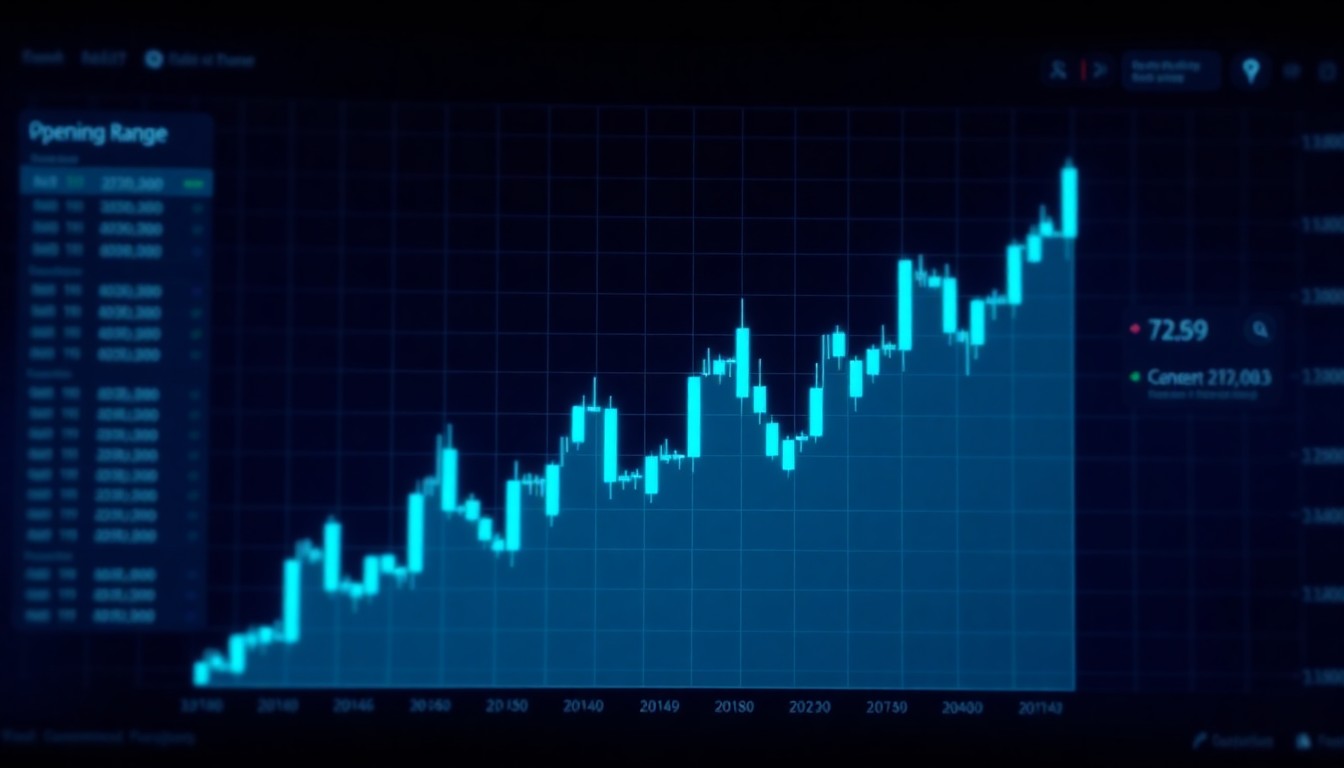
The Opening Range Breakout (ORB) is one of the oldest and most durable momentum patterns in intraday trading. The rules are simple: define a window at the start of the session (typically the first 5, 15, or 30 minutes), mark the highest high and lowest low in that window, and enter when price closes decisively above the range high on strong volume.
ORB is one of several patterns we tag inside regular hours. It is not, by itself, the reason for that 62% number — many other setups contribute — but it is one of the cleanest illustrations of how an order-flow-imbalance signal can be measured. The full per-pattern follow-through is visible on the public history.
The idea has been around since the 1970s. Toby Crabel's 1990 book Day Trading with Short Term Price Patterns popularized a related setup, the Opening Range Breakout with a narrow range filter, and the concept has been repackaged hundreds of times since. The reason it survives isn't the rules — it's the underlying microstructure.
Why ORB works
The first few minutes of a session are dominated by order imbalance: overnight news, pre-market gaps, and early institutional fills all hit the tape at once. By the time the opening range closes, the market has priced in the news. Whatever direction price pushes next is the real signal, because the initial order flow has cleared.
On small-cap momentum runners, this effect is amplified. A ticker that's up 40% pre-market on a press release will see heavy profit-taking right at 9:30. If it still breaks the 9:45 range high on increased volume, the sellers are exhausted and buyers have taken over. That's the ORB signal.
The anatomy of a valid ORB
- Clean range. The opening range should look like a consolidation, not a trend. If price ran straight up for 15 minutes and closed at the high, there's no "range" to break.
- Volume expansion. The breakout bar must have volume visibly higher than the range's average. No volume = no institutional participation = fake-out.
- VWAP support. Price should be at or above the Volume-Weighted Average Price. An ORB that fails to stay above VWAP usually rolls over.
- Higher low than the range low. If price dipped below the range low during the range window, the range is "broken" on the downside — the setup is already compromised.
ORB parameters for small-cap momentum
Classic ORB uses a 15-minute or 30-minute window. On penny stocks and small-cap runners, we find a 5–15 minute window works better because the moves are faster. The longer the range, the more shares change hands, and the larger the follow-through needs to be to signal real buying.
Typical risk management: initial stop at the range low (or at VWAP if you want a tighter stop), target the R-multiple of your choice. Many pro traders use a trailing stop once price extends two ATR above the breakout bar.
Common ORB mistakes
- Entering without volume. A breakout without volume is an "offer pulled" move — sellers just stepped away, not buyers stepped in. It rolls over immediately.
- Entering the first breakout on a choppy stock. Some tickers break their opening range three or four times in both directions. If ADX is low, ORB is garbage on that ticker — skip it.
- Using a fixed stop distance. Your stop should be structural (below the range low, below VWAP) not arbitrary (−5%). A structural stop invalidates the setup; a fixed stop just gets hit randomly.
ORB in the BullAlert scanner
BullAlert's scanner detects the ORB pattern automatically for every alert that fires during or shortly
after the opening range. We tag the pattern as ORB:A through ORB:D based on
volume, range quality, and VWAP alignment. The 4:00–4:15pm after-hours opening range is a particularly
high-quality variant — breakouts sustain far better than in regular hours.
Summary
ORB is simple, durable, and easy to code. It works because it waits for the initial order-flow imbalance to clear before taking a signal. It fails when you ignore volume, when the underlying stock is choppy, or when your stop isn't structural. Study it on paper for a month before trading it live.
Frequently asked questions
What is the right ORB time window — 5, 15, or 30 minutes?
For small-cap momentum the 5-minute and 15-minute windows tend to outperform the classic 30-minute. Faster moves and thinner liquidity mean the post-imbalance signal arrives sooner. The 30-minute window is better for higher-priced, more liquid names where the early tape is dominated by index-rebalancing flow rather than catalyst-driven buying.
Does ORB work in pre-market?
It can, but with caveats. Pre-market liquidity is too thin for a clean opening range in most names. The exception is the 4:00–4:15 PM ET after-hours window: post-earnings or contract-PR gappers form a tight range and the breakout sustains far better than the 9:45 AM RTH variant.
What's a sensible volume threshold for the breakout bar?
Visibly higher than the range's own average — typically 1.5×–3× the average bar inside the range. The exact multiple matters less than the principle: if the breakout bar is the highest-volume bar of the session so far, institutional participation is confirmed.
Where should the initial stop go?
Structural, not arbitrary. The two cleanest options are (a) below the opening-range low, which invalidates the entire setup if hit, or (b) below VWAP if you want a tighter stop and accept that VWAP is a soft level. A fixed -X% stop has nothing to do with the pattern and tends to get random-walked out before the move develops.
How often does an ORB actually follow through?
Pattern hit rate varies enormously by underlying ticker, sector regime, and broader market context. Rather than quote a single number, we publish the full catch-to-peak history for every signal we surface — readers can filter by pattern and session and judge the follow-through themselves.
Related reading
- How the BullAlert scanner grades ORB setups — A–D pattern grading, session-aware thresholds, late-catch guard.
- For paper traders — use BullAlert's signals as your input and paper-trade them in your broker of choice.
- For learners — read scored alerts and pattern explanations as a study tool.
- Best stock market data APIs (2026) — what feeds power an accurate opening range.
- How we built the multi-session scanner — pipeline overview, three-session scoring.
- Methodology — catch% / peak% rules, sixteen internal scoring gates.
- More guides on the BullAlert blog — VWAP reclaim, RVOL, gap-and-go, and late-catch avoidance.